AI has already proven it can make advisors more efficient. The next phase of adoption will be defined by something equally important: trust.
For the past decade, innovation in wealth management followed a familiar pattern: adopt the latest tool, layer on another point solution, and find workarounds for what didn’t integrate. Each upgrade promised progress. Taken together, they often delivered the opposite—more complexity, fragmented data, and additional busywork for advisors and their clients.
Artificial intelligence is beginning to change that dynamic, but not in the way many expected.
According to the AI edition of the 2026 Connected Wealth Report, advisors have moved decisively past the question of whether AI belongs in their practices. Seventy-four percent now view AI as a help rather than a threat, up from 64% just two years ago. That shift doesn’t reflect blind optimism; it reflects experience. Advisors have tested AI, seen where it delivers value, and developed a more disciplined understanding of what it should—and should not—do.
What’s driving adoption today isn’t hype or headlines. It’s results and utility.
AI’s First Win Was Clearing the Clutter
Advisors aren’t turning to AI to replace judgment or outsource professional expertise. They are using it to remove friction from the work that helps them deliver personalized advice.
Advisors are increasingly comfortable delegating administrative tasks, but they are far more deliberate when technology begins to influence client-facing decisions or portfolio outcomes. This distinction matters. Advisors aren’t resisting AI; they are calibrating trust.
The data makes this clear. Ninety-three percent of advisors want final say over AI-generated outputs, and only 8% would allow AI to rebalance portfolios or execute trades without review. That boundary reflects how advisors actually work. In a profession defined by fiduciary duty and long-term relationships, confidence is built through visibility, control, and consistency—not automation alone.
This is where the next phase of adoption is being decided. AI is no longer evaluated solely on what it can do, but on whether advisors and firms can explain, supervise, and stand behind its outcomes. That means the next wave of AI will be driven by fintech firms that bake security and compliance into their core architecture.
The Trust Barrier
More than half of advisors cite compliance, cybersecurity, or regulatory concerns as reasons to take their time adopting AI. Fewer than one-quarter say they are fully confident their current AI tools meet regulatory standards. That uncertainty has practical consequences: AI may stay siloed while use cases remain relatively narrow for now.
What advisors are asking for isn’t just more functionality; they want assurance—and technology partners that provide it by design.
They want AI that fits naturally into existing workflows, operates on clean and connected data, provides transparency through audit trails and explainability, and aligns with firm-level supervision and compliance frameworks. In short, they want AI that is architected for trust, not retrofitted after deployment.
Once advisors trust that AI is compliant and operating within regulatory guardrails, that’s when it will make the next leap, from being a tool for efficiency to a means for transformative intelligence and insight.
The Next Era of Advisor Experience is AI-Native
An AI-native advisor experience starts with a unified foundation—where data, workflows, and intelligence operate together to support how advisors actually work.
In this model, AI doesn’t sit alongside the advisor’s work; it works within it. Preparing for meetings automatically. Surfacing relevant household context in real time. Drafting follow-ups that reflect prior conversations and firm standards. Flagging anomalies, next steps, and opportunities without requiring advisors to piece together information across systems.
Just as importantly, an AI-native advisor experience embeds the controls that trust demands. Advisors can see how insights are generated. Firms can supervise activity consistently. Compliance teams can audit outcomes without slowing the business down.
The firms that lead in the next phase of wealth management will be the ones that choose platforms designed to pair innovation with oversight, efficiency with transparency, and automation with accountability.
That shift is already underway—and it will define the next generation of the advisor experience.
If these ideas resonate with you, I invite you to schedule a fast and easy demo to see how Advisor360°’s AI-native advisor experience can transform your practice—or follow us on LinkedIn to continue the conversation.
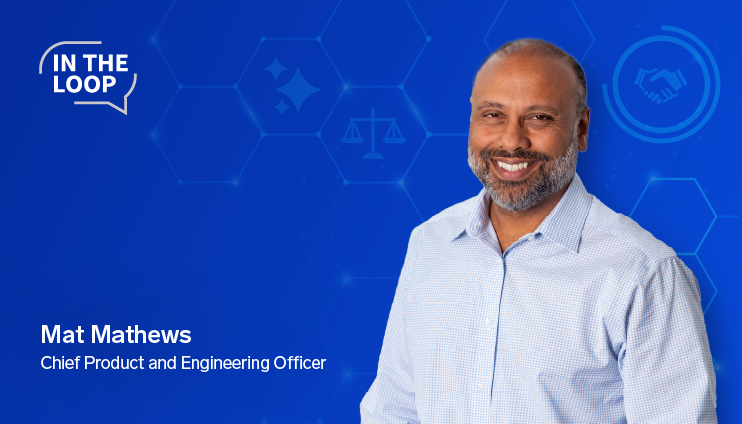
Mat Mathews is the Chief Product and Engineering Officer at Advisor360°.
.jpg?width=30&height=30&name=Mat_Mathews_630x630%20(1).jpg) Mat Mathews
Mat Mathews